
Screens
“Turn It Up!” How Our Kitchen Speaker Became a Volume War
Two kids, one smart speaker, and a word they both learned at the same time: “Louder!”
How it started
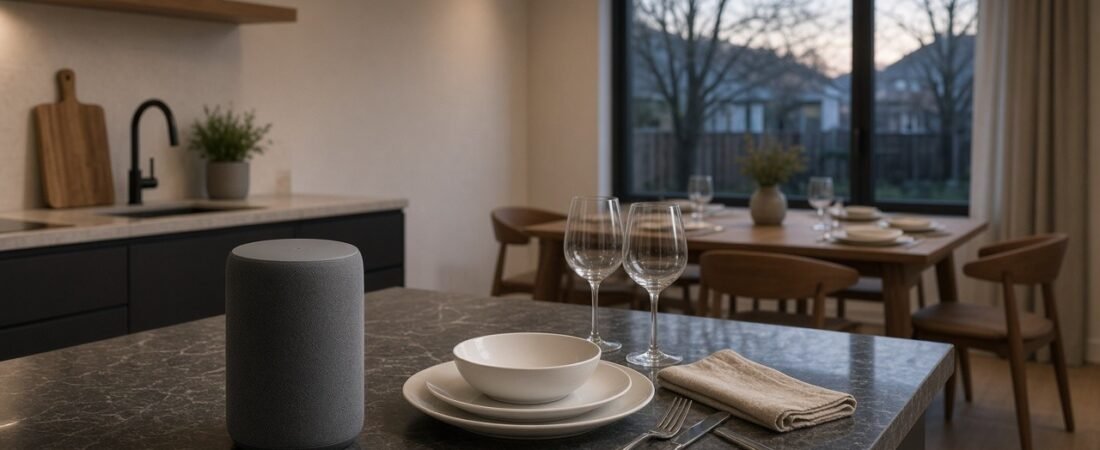
The speaker sat on our kitchen counter mostly for timers and the weather. Then our four-year-old figured out she could ask it to play her favorite song, and her two-year-old brother figured out the magic phrase “Turn it up!” From that day on, every afternoon sounded like a concert in a tin can.
She wanted it loud. He wanted it louder. When I said “Turn it down,” they shouted over me. Sometimes they shouted conflicting commands at the same time, the speaker got confused, and both of them melted down because it was “broken.” My ears rang. Our neighbor once knocked.
I didn’t want to unplug it forever because we did like dancing in the kitchen. So we needed rules that a two-year-old could follow.
Not medical or clinical advice: I’m a parent of two toddlers sharing what helped at home, not a pediatrician, therapist, or child-development expert. Every child is different. If you have questions about your child’s anxiety, sleep, screen use, or development, please talk to your pediatrician.
Why this was so hard for a toddler
To a small child, shouting at the speaker is power. You say a word, and the world gets louder. That’s thrilling, especially for the youngest kid who doesn’t control much.
With two kids, it was also a contest. Whoever said the last word won the room. The volume wasn’t really about the music anymore.
What made it worse
- Arguing with them over the speaker. Three people shouting commands, and nobody heard anything.
- Unplugging it mid-song. It felt like a punishment, and the next day was worse.
- Letting the loudest kid win. That taught them volume was a shouting contest.
What actually helped
1. One DJ at a time
We took turns. The DJ chose the song. Nobody else gave commands. If taking turns is hard to picture, a simple Melissa & Doug magnetic responsibility chart can be adapted with a “today’s DJ” marker—or you can make one with paper and a magnet.
What I say: “Today you’re the DJ. Your brother is next.”
2. Pick a house volume
We tried different levels and chose one that was fun but not painful. That was the “dance number.” We also checked whether the speaker had a maximum-volume setting; a preset helps, but an adult still needs to keep the sound comfortable.
What I say: “Our dance number is the most it goes.”
3. Grown-ups say the volume words
Kids could ask for songs. Only a grown-up changed volume.
What I say: “You pick the song. I’ll do the volume.”
4. A whisper song
When it got wild, we did one quiet song where we danced in slow motion. For a screen-free change of pace, a simple Hape wooden rainmaker could be a gentle sound-making option, with age guidance and supervision; clapping softly works just as well.
What I say: “Whisper-song time! Tiny dancing.”
5. A speaker-off cue
When the dance timer ended, we said goodbye to the speaker together. A visual timer such as the Time Timer MOD may help some children see when dance time is ending, but a kitchen timer or a simple last-song warning works too.
What I say: “Last song, then we say bye-bye, speaker.”
6. Quiet hours on the speaker
Using the settings, we limited volume at night, which ended dawn concerts. Settings vary by speaker, so it’s worth checking for volume limits, quiet hours, and whether children’s voice commands can change them.
What I say: “The speaker is sleeping now too.”
Honest limits
There were still days when someone yelled “LOUDER!” Two-year-olds will two-year-old. But the rules gave us something to come back to.
We keep the speaker and its cords securely positioned, and we don’t let the kids turn the sound up unchecked. Loud sound can be uncomfortable and potentially harmful, so we lower it or stop when conversation is difficult or anyone seems bothered. No chart, instrument, or timer replaces that boundary.
From one tired parent to another
If your kitchen sounds like a stadium, you’re not alone. Smart speakers make little kids feel powerful. Give them some power, but not the volume knob.