
Separation
The Eye Exam Where I Had to Wait Outside the Dark Room
The nurse said, “Mom can wait right here,” and pointed at a chair outside a dim little room. My three-year-old looked at that doorway like it was a cave.
How it started
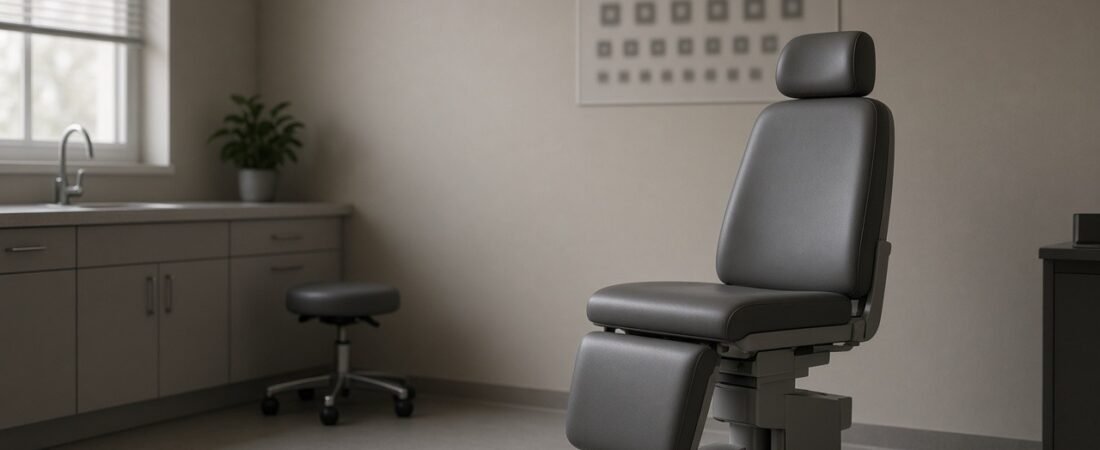
It was supposed to be a quick vision check. Our pediatric clinic had sent us down the hall to a small room with the lights turned low, a chart glowing on the far wall, and a friendly nurse who explained that the screening went faster when parents waited just outside. There was a chair by the doorway. I could see in, sort of. My daughter could not see me, not really, once she was sitting in the big chair facing the chart.
She froze at the threshold. Not a scream, just a full-body stop, her hand twisting the hem of my shirt. “It’s dark,” she whispered. “You come.” The nurse was patient, but there was a line of other families behind us, and I could feel my face getting hot. I tried the cheerful voice. I tried “You’re so brave.” Both made her grip tighter.
We did eventually get through it, on our second try that morning, and with a couple of changes I now use for any appointment where I’m asked to step back. None of them are clever. They’re just the things I wish I had known before we walked down that hallway.
Not medical or clinical advice: I’m a parent of two toddlers sharing what helped at home, not a pediatrician, therapist, or child-development expert. Every child is different. If you have questions about your child’s anxiety, sleep, screen use, or development, please talk to your pediatrician.
Why this was so hard for a toddler
For a small child, a dim room plus a stranger plus a parent who suddenly isn’t next to them is three new things at once. Any one of them alone she could probably handle. Stacked together, her body said no before her brain had a chance to think about it.
The other piece was surprise. At home she knows what’s coming. In that hallway, the plan changed right in front of her, from “we’re going to the doctor together” to “you go in, I stay here,” and nobody had warned her.
What made it worse
- Telling her she was brave before she felt brave. It sounded like pressure, not comfort.
- Rushing because of the line. She could feel me hurrying, and it made the room scarier.
- Hovering in the doorway half-in, half-out. She didn’t know which version of me to trust.
What actually helped
1. Preview the room at home
The next time, we played “eye doctor” in her bedroom with the lights dimmed and a picture taped to the wall. Dim stopped being strange.
What I say: “The room will be a little dark, like our pretend game. That helps the pictures glow.”
2. Ask for ten seconds of look-around
I asked the nurse if she could flip the light up for a moment so my daughter could see the whole room first. She happily did.
What I say: “Let’s look at the room with the lights on, then they’ll go cozy.”
3. Name exactly where I’ll be
Not “right outside” but “in the blue chair by the door.” She checked the chair before she went in.
What I say: “I’ll be in that blue chair. I’m not going anywhere else.”
4. Give her a job
The nurse asked her to point at shapes. Pointing gave her hands something to do besides grip.
What I say: “Your job is to point at the pictures. You’re the pointer.”
5. Talk from the chair
I let her hear me now and then, quietly, without taking over the test.
What I say: “I can hear you pointing. I’m right here.”
6. A plan for after
A walk to the window at the end of the hall to watch cars. Something to aim for.
What I say: “When you’re done, we’ll go count cars at the big window.”
Honest limits
This didn’t make her love the eye exam. She still went in with a wobbly lip, and if the room or the staff had been different, I might have asked to stay closer. Clinics vary, and it’s fine to ask what’s possible.
From one tired parent to another
If your child freezes at a doorway, it isn’t you failing. It’s a small person doing a lot of new things at once. Slow down, name your chair, and let them see the room first.